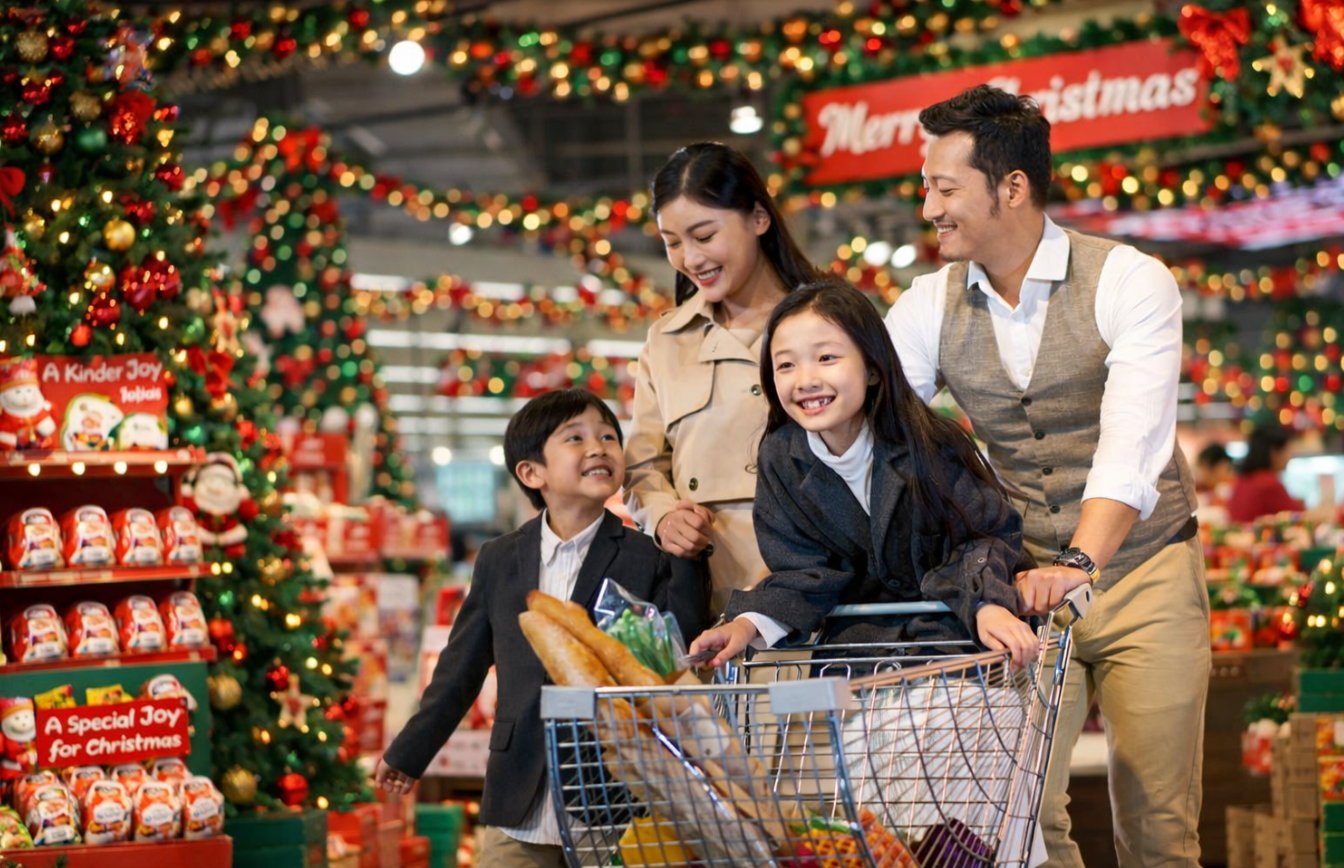
An inside look at how a digital-native delivery brand used trolley advertising to reach shoppers at the exact moment a delivery need was forming — and the thinking any marketer can apply.
The counterintuitive move
When people think about in-store media, they think about brands promoting products on shelves — cereal, shampoo, detergent. They don’t usually think about a delivery app.
GrabExpress, Grab’s on-demand delivery service, isn’t a product that sits on a supermarket shelf. It’s a service that lives on a phone screen. So, when their team decided to partner with ShopComm to activate their campaign inside retail stores through trolley advertising, it broke a lot of assumptions about what in-store media is for.
It also worked — not because the format was novel, but because the thinking behind it was sharp. Here’s what that thinking looked like, and what it can teach any brand considering whether in-store media belongs in its plan.
The Challenge
As a digital native brand, GrabExpress had strong online presence but limited touchpoints in physical retail environments. Yet supermarkets were exactly where their target audience was, shoppers buying products they'd soon need to send as hampers, in real time, with a delivery need already forming.
The challenge: how to cut through the visual noise of a busy retail environment and deliver a message that felt relevant, not out of place.
The Solution
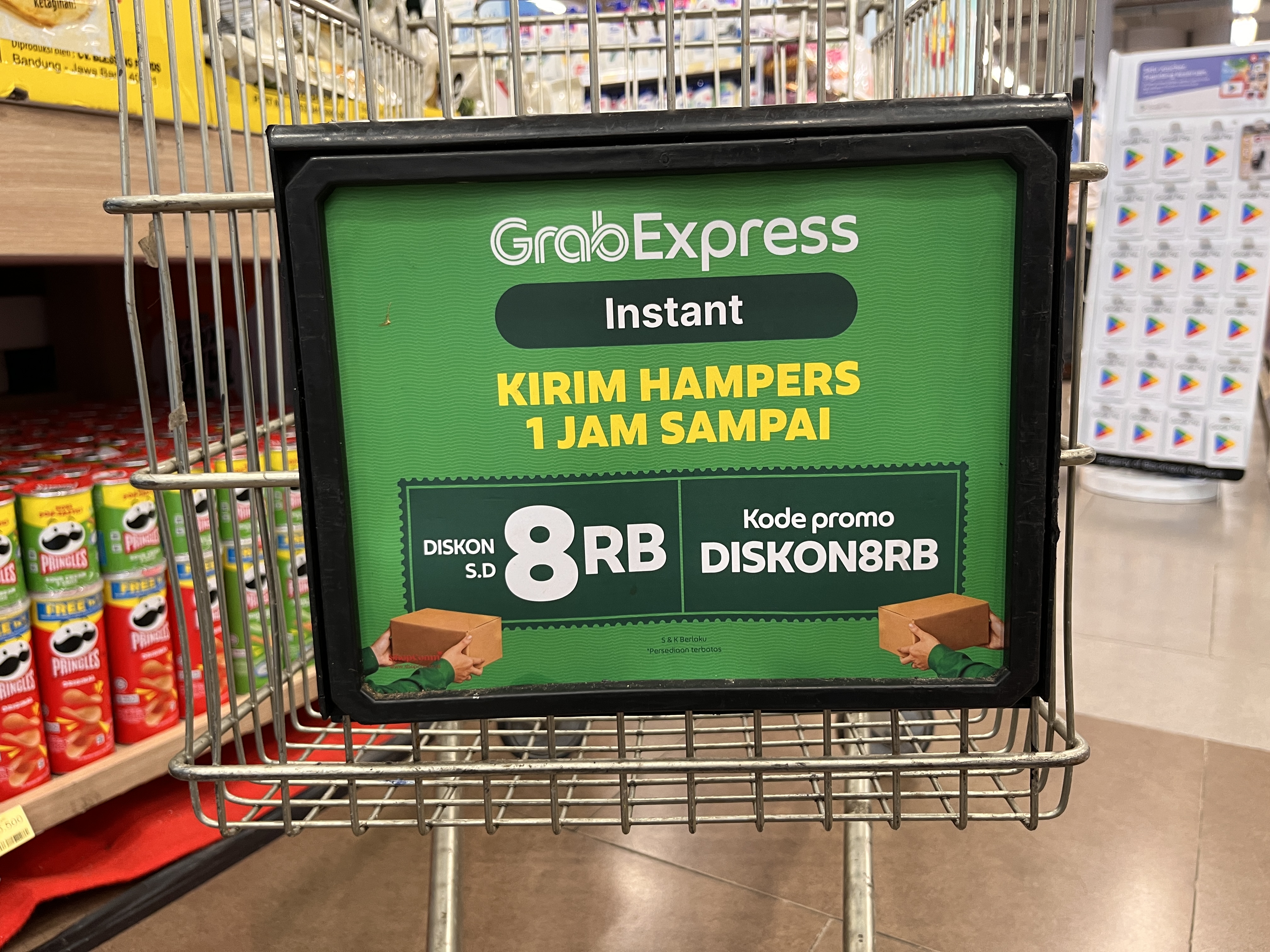
ShopComm deployed GrabExpress's campaign through trolley ads across key modern trade outlets; one of in-store media's most underutilized yet high-impact formats.
Trolley ads travel with shoppers for their entire store visit. Every aisle, every pause, every queue at the checkout — the message is there, in a frame the shopper is already looking at to check their list or their phone.
The creative reflected the context:
- Benefit led copy — “Kirim hampers, 1 jam sampai” — a direct, local language hook tied to a clear use case.
- Contextual trigger — the message connected to what shoppers were already doing: buying things to send to people.
- Digital conversion bridge — an embedded promo code turned passive awareness into a trackable action inside the app.
.png)
Why it worked — and why it matters for your brand
Three principles made this campaign effective. They’re the same principles that determine whether in-store media is worth a line in your plan.
1. Format followed behaviour, not convention. Trolley ads were chosen because they matched how shoppers move through a store — not because they were the default option. Most brands pick in-store formats based on what’s available. The better question is what the shopper is doing when the message lands.
2. The message met the moment. A delivery ad in a feed is competing with a thousand other things. A delivery ad in front of a shopper loading hampers into a trolley is competing with almost nothing. Relevance isn’t just about who sees the ad. It’s about what they’re doing when they see it.
3. The bridge to digital was built in. A promo code is small, but it’s the thing that turns an in-store placement from a brand exercise into a performance asset. Any brand running in-store should design that bridge from day one. Whether it’s a code, a QR, a short URL, or an SMS trigger.
Is in-store media right for your brand?
Trolley advertising and in-store media more broadly, tends to work best when one or more of these is true:
- Your product or service is adjacent to what shoppers are already buying — delivery, payment, insurance, telco, OTAs, fintech, loyalty programs.
- You’re a digital-first brand looking to build presence in physical retail environments without the cost of full retail distribution.
- You have a seasonal or occasion-led campaign — Valentine, Ramadan, back-to-school, year-end — where shoppers’ state of mind aligns with your message.
- You need measurable in-store activation, not just brand visibility, which means building a redemption or tracking mechanic into the creative from the start.
If two or more of those apply to you, in-store media is probably underweighted in your current plan.
What ShopComm does
ShopComm’s role in a campaign like GrabExpress’s goes beyond placing an ad. We map the right format to the right shopper moment, negotiate placement across retailer networks, work with brand teams to sharpen creative for the in-store context, and help build the measurement loop back into the brand’s digital stack.
The GrabExpress campaign is one example. The thinking behind it applies to many more — across categories, across seasons, across brand sizes.
ShopComm Team Credits:
Sales Director: Nancy Purba
Sales General Manager: Aninda Lantang
Client Service: Maria Christina
Operations Director: Ine Marasudin
.png)

.png)

.png)